
Solutions
Industrial robots
Looking to increase productivity, improve product quality and automate repetitive tasks? Industrial robots help you achieve faster, more precise and more flexible production. At Elenco, we engineer and integrate tailored robotic solutions that match your production needs, from the initial concept to a fully operational installation.
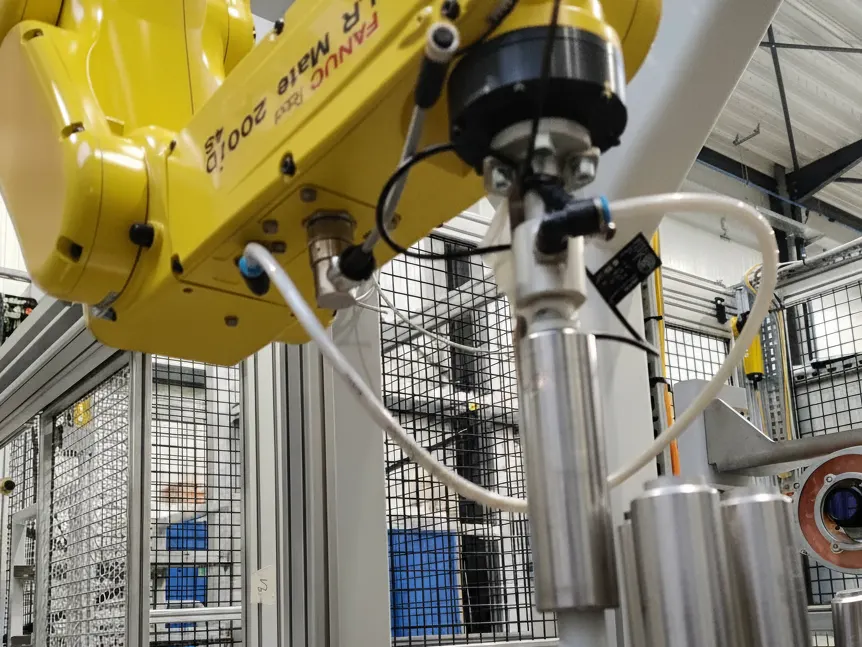
Industrial robots help optimise production processes, increase production capacity and ensure consistent product quality. By taking over repetitive, complex or physically demanding tasks, they allow your employees to focus on higher-value activities. Depending on the application, different robot types offer specific advantages in terms of speed, reach, payload and precision. From versatile 6-axis industrial robots for palletising and machine tending to fast SCARA robots for assembly and pick-and-place applications, or delta robots for high-speed handling of lightweight products, we select the technology that best fits your needs.
Whether it is palletising, assembly, machine loading and unloading, product handling or complex automated operations: our engineers analyse your application and select the most suitable robot configuration. In doing so, we take into account factors such as the required cycle time, product variation, available space and safety requirements. We handle the entire integration process, from concept and mechanical/electrical design to machine vision, programming and commissioning. The result is a complete solution that fits seamlessly with your existing machines and production process.
Push the boundaries of your production process?
Applications
How can an industrial robot be used on the shop floor?
-
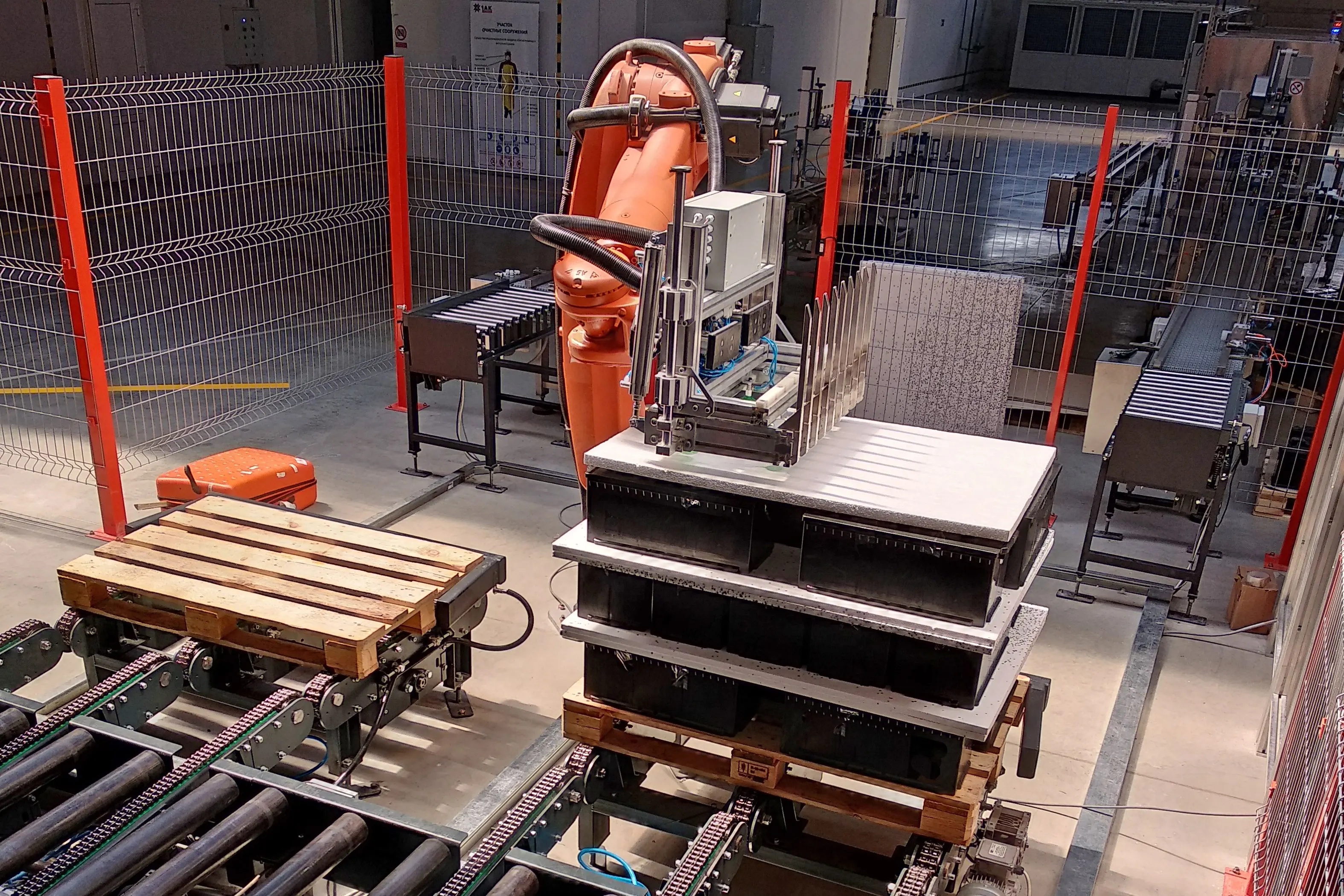
High-speed palletising
Building full pallet loads at the pace of a fast production line, even with heavy bags or crates.
-
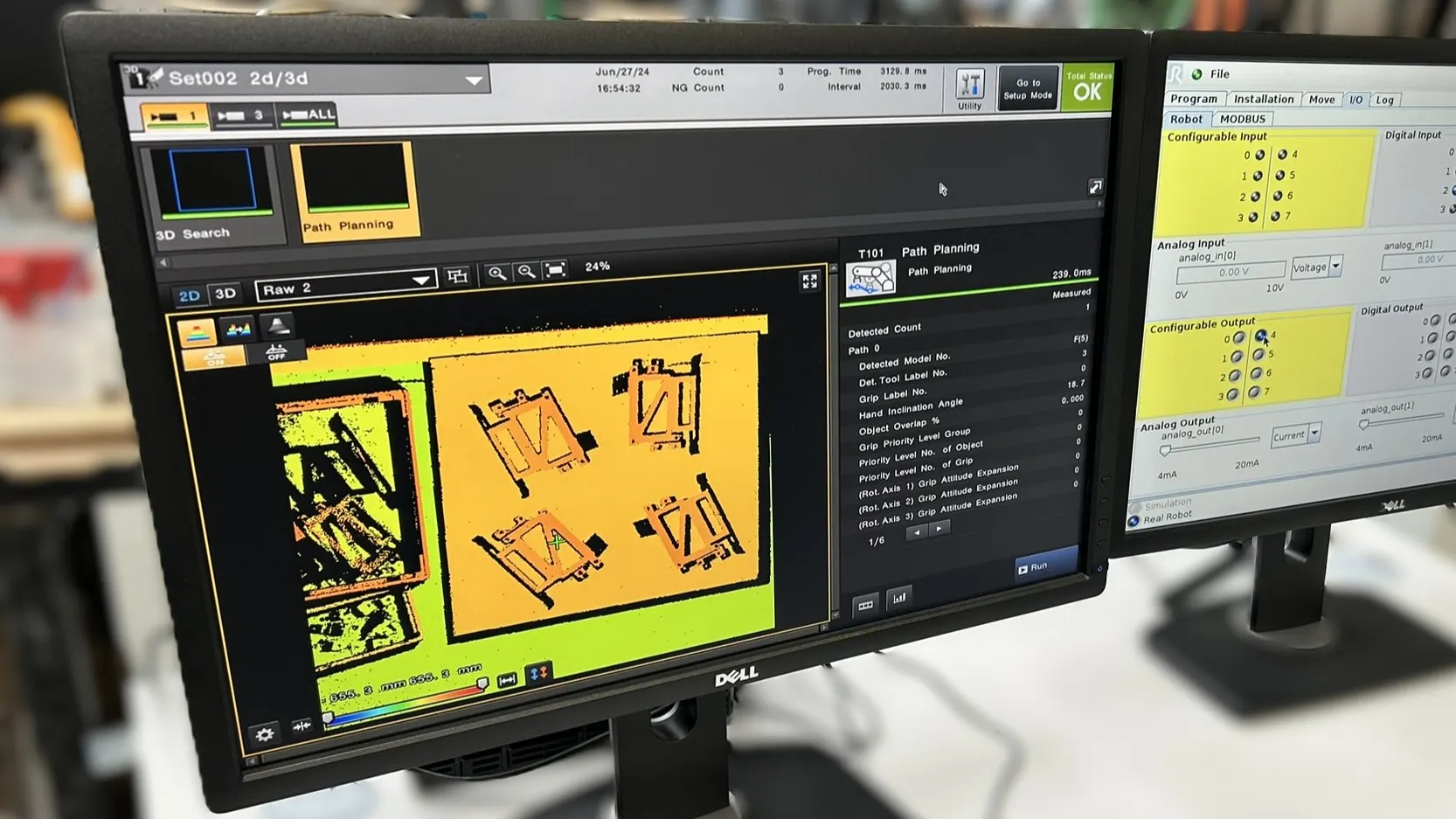
Bin picking with 3D vision
A 3D camera shows the robot where each part lies, so it can pick unsorted parts from a bin or a pallet.
-
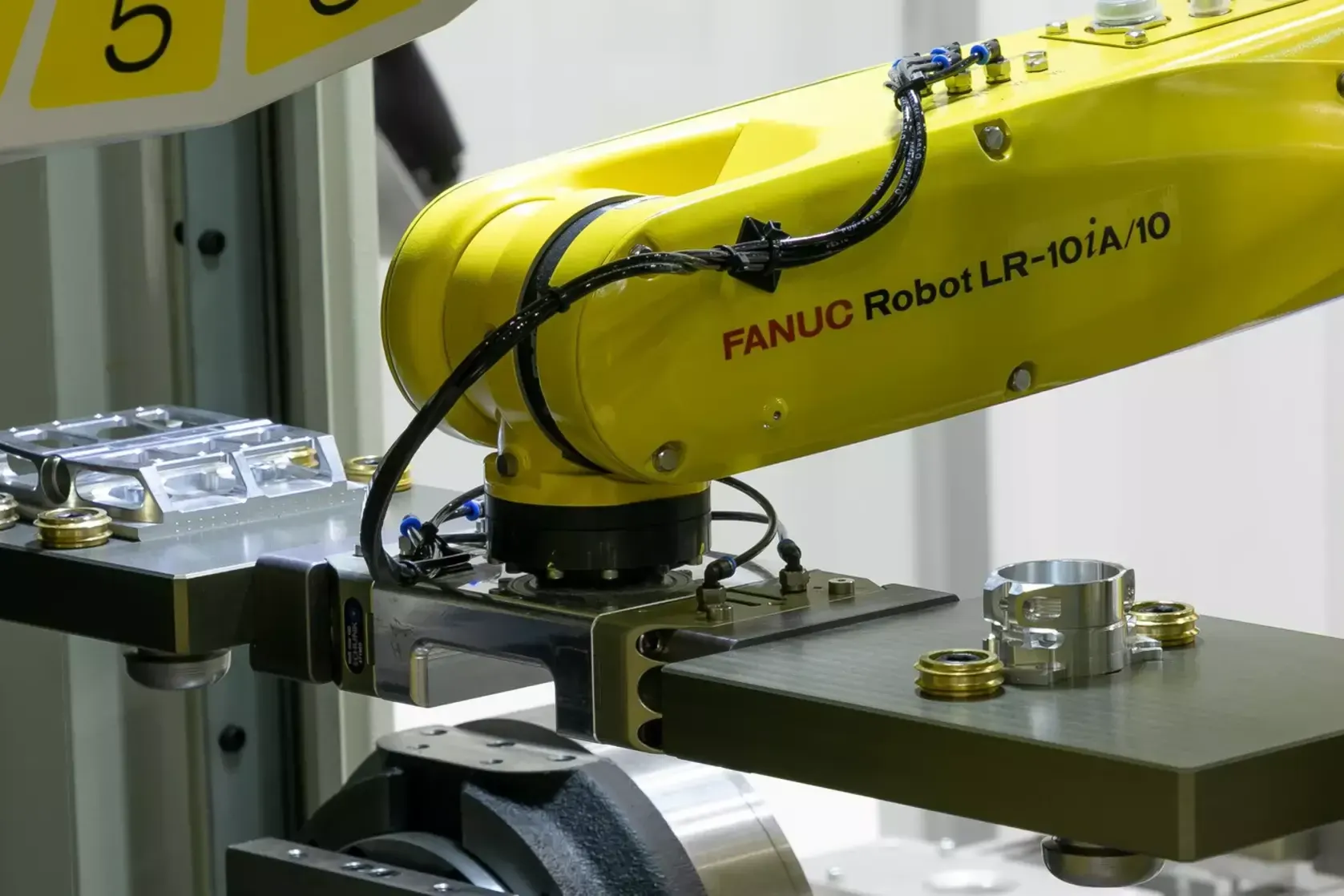
Machine loading and unloading
Tending CNC machines, presses or injection moulding machines, even during unmanned shifts.
-
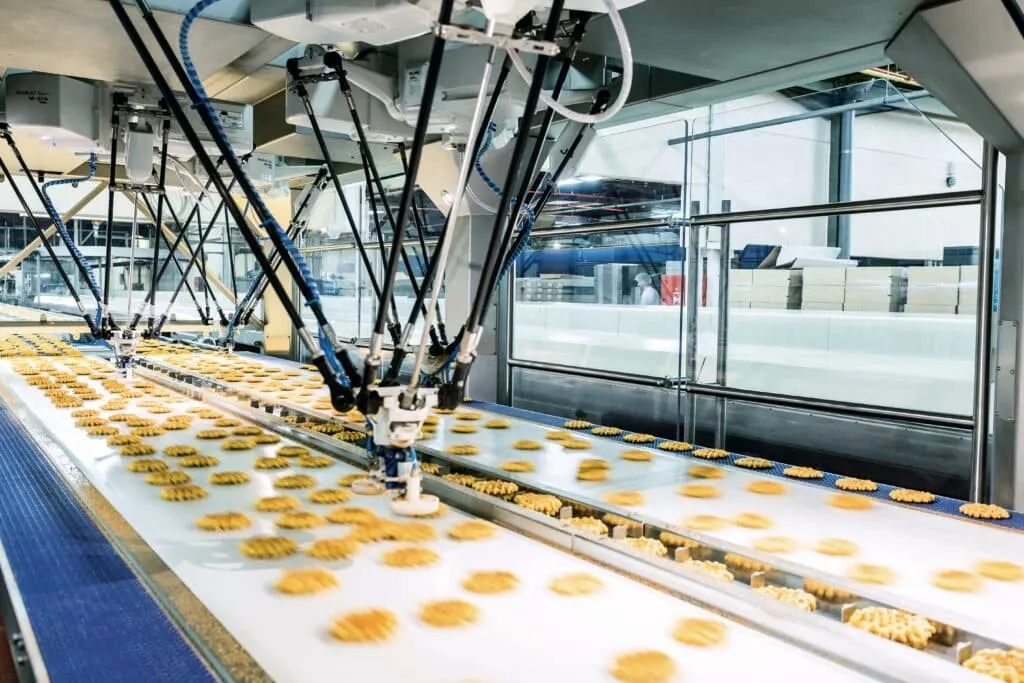
High-speed pick & place robots
Placing products on conveyors or into trays, blisters and other packaging at very high speeds.
-
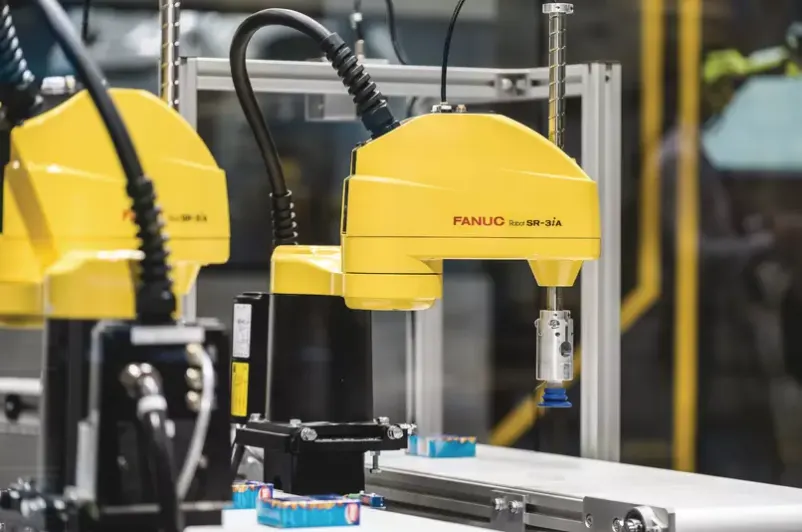
Sorting and inspection
Separating good and rejected products, sorting products by type or arranging them by size.
-
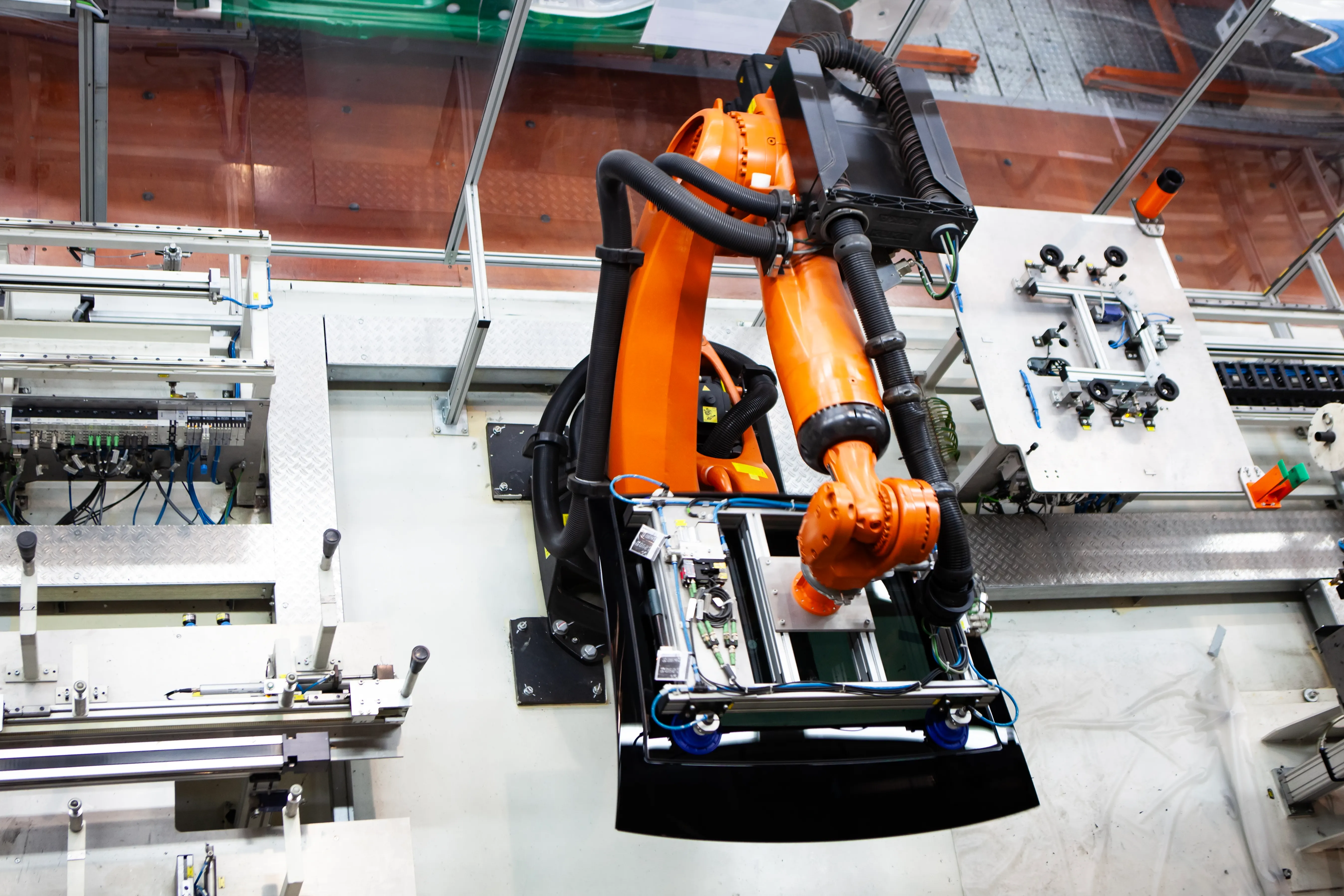
Assembly and machining
Assembling, screwing, gluing or deburring parts with high precision.
Our expertise
Elenco, your expert in vision-guided robotics
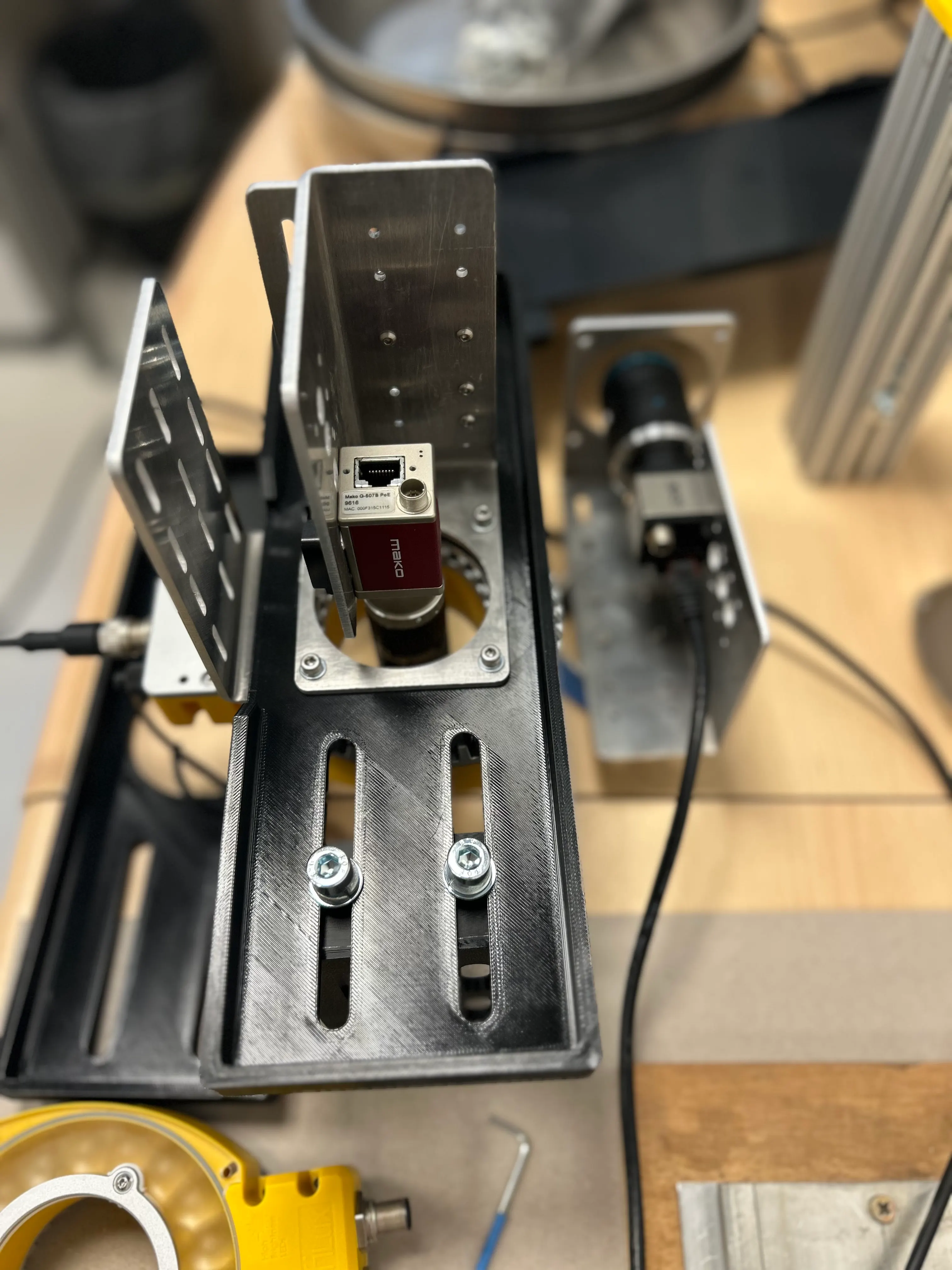
With vision-guided robotics, a camera system helps the robot determine the position and orientation of products. This allows the robot to pick up products that are randomly positioned or arrive unsorted. Typical applications are flexible feeding and 3D bin picking, where products are automatically presented to the robot. We select the most suitable vision system and design the grippers and conveying systems needed for smooth product infeed and outfeed.
As an integrator, we tailor the complete robot cell to your production process, with custom software where needed. We guide you from concept to commissioning, train your operators and make sure the installation meets the applicable safety standards.
Projects
that push
boundaries
-
- Food & beverages
- Vision and measurement systems
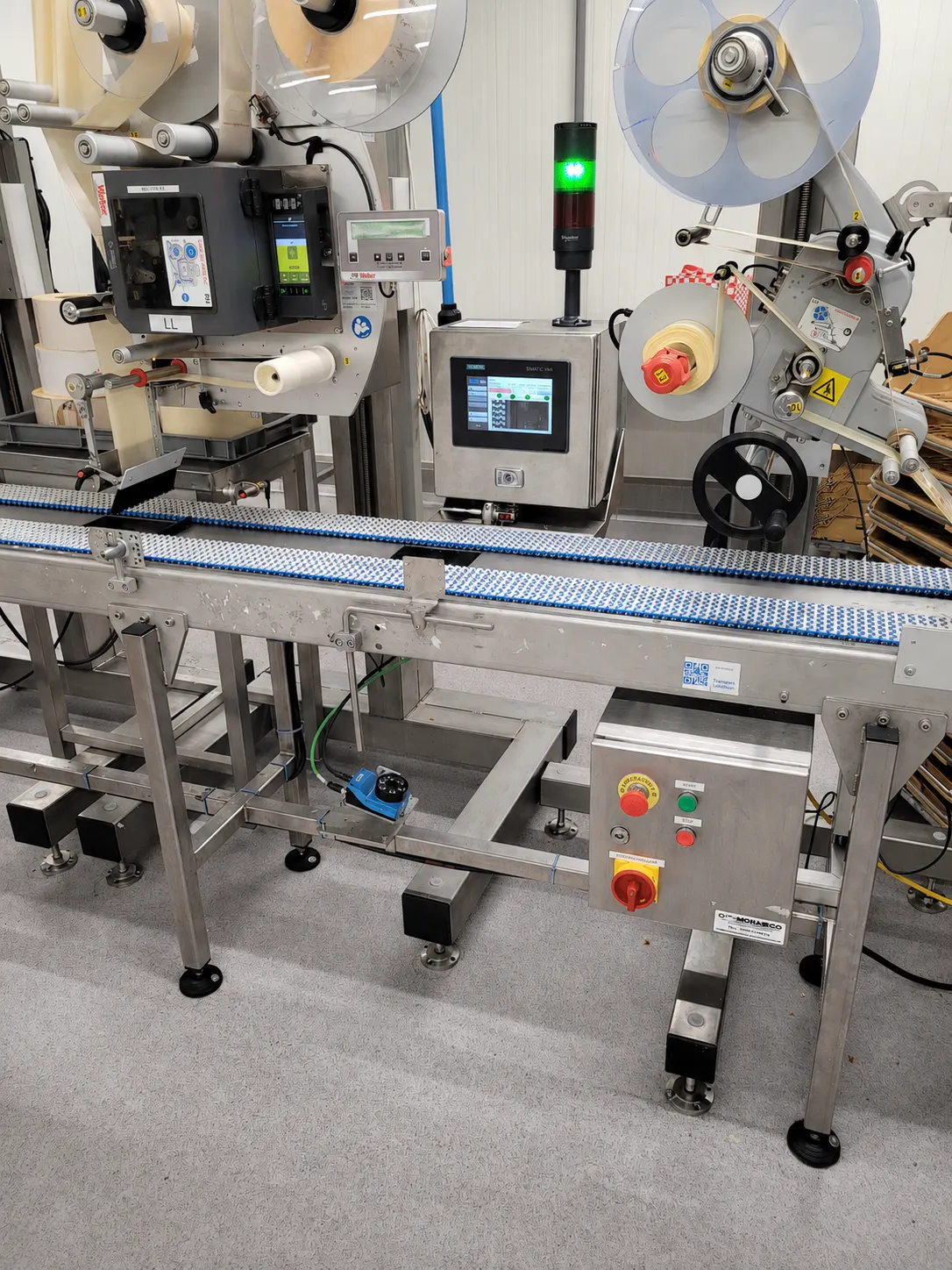
Smart label inspection at La Lorraine
-
- Food & beverages
- Collaborative robots
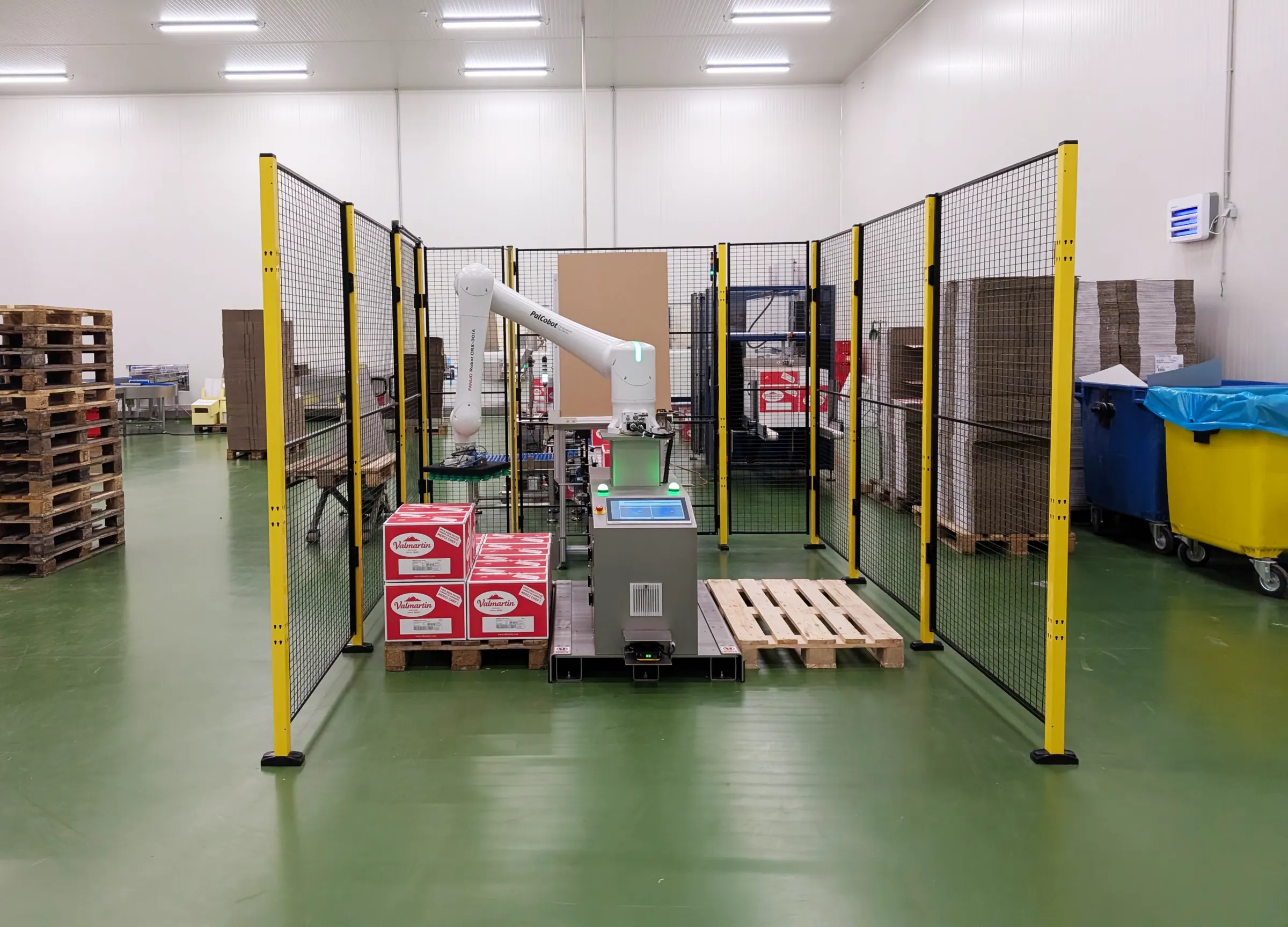
Efficient palletising in the food industry: a compact PalCobot solution for F.F.P. NV
-
- Building & construction
- Consumer goods
- Collaborative robots
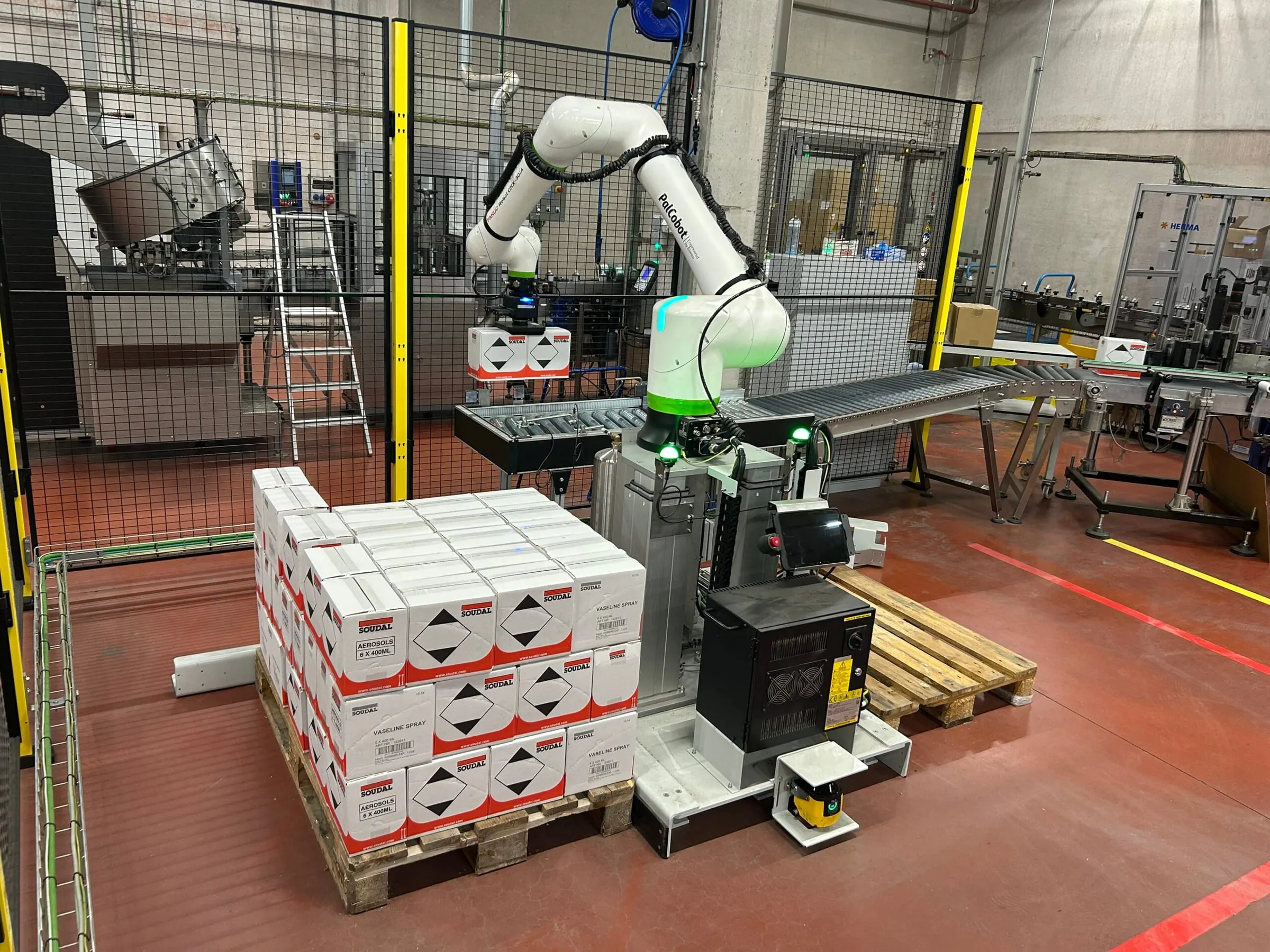
High-mix, low-volume cobot palletiser at Aerotrim
-
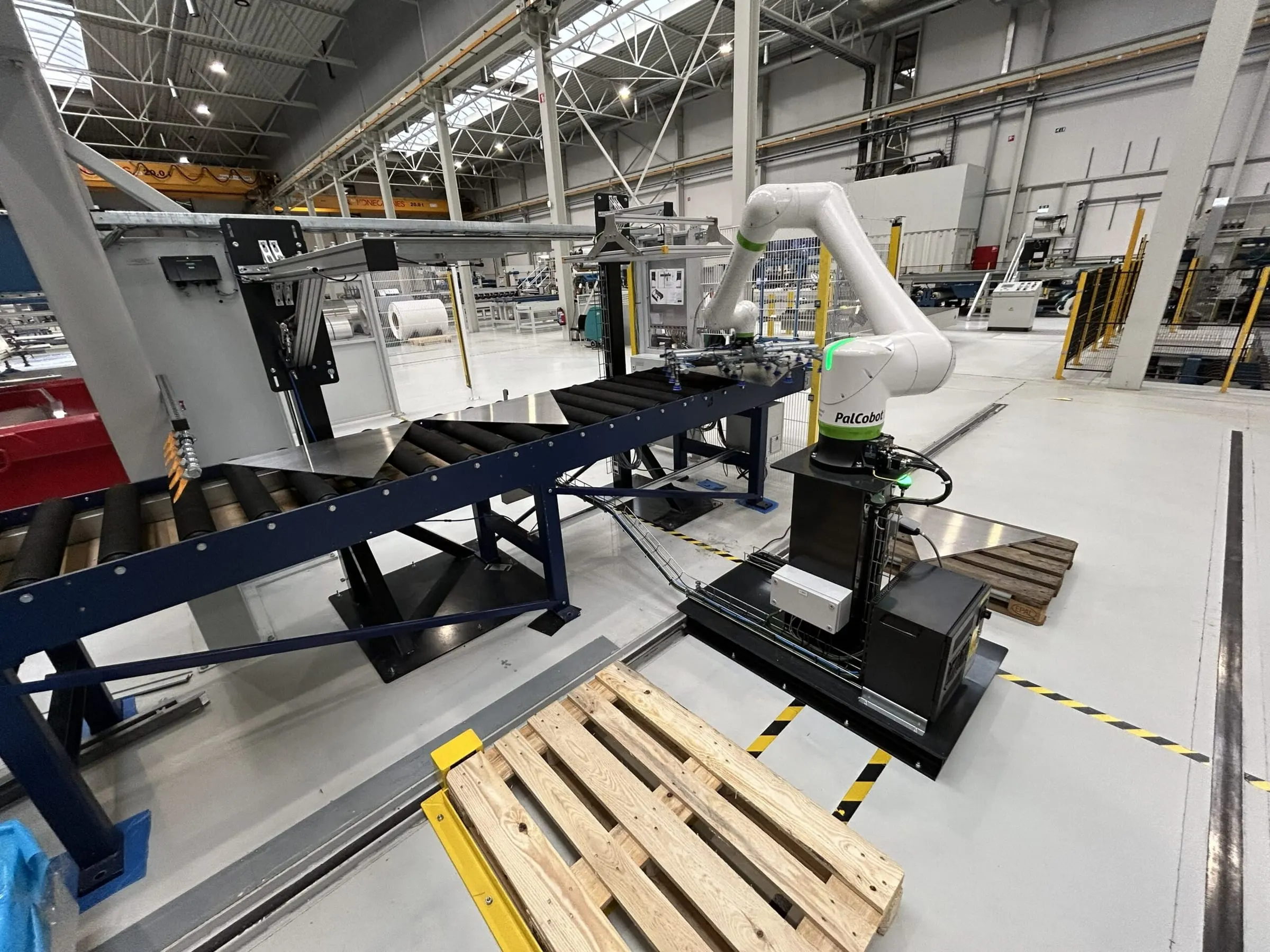
- Building & construction
- Collaborative robots
- Vision and measurement systems
Flexible stacking of CNC-milled metal shapes with cobot & vision at Decomecc
-
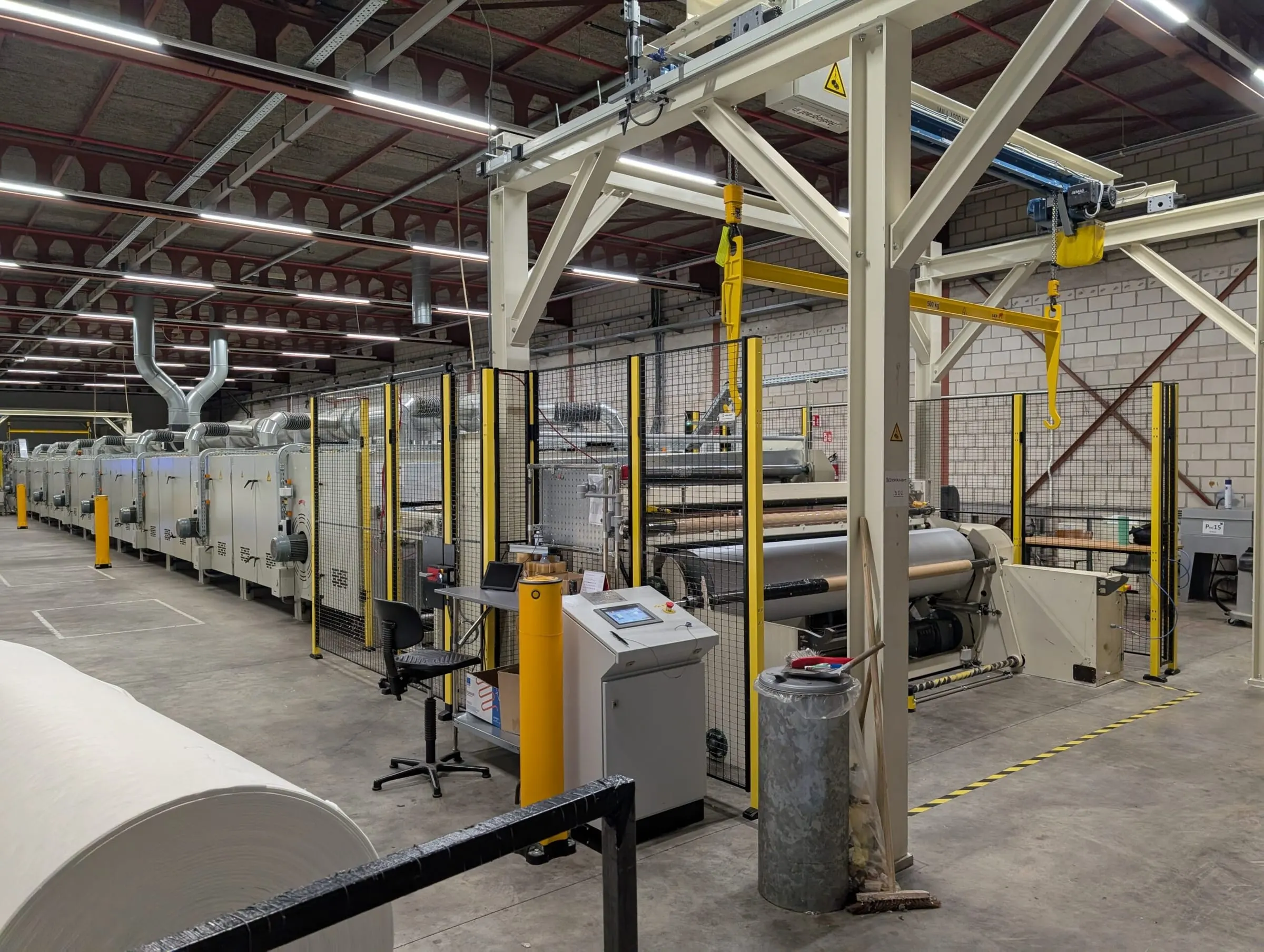
- Consumer goods
- Industrial electrical engineering
- PLC / PC programming
Hydrocharger safety upgrade according to ISO 13849-1: from analysis to implementation!
-
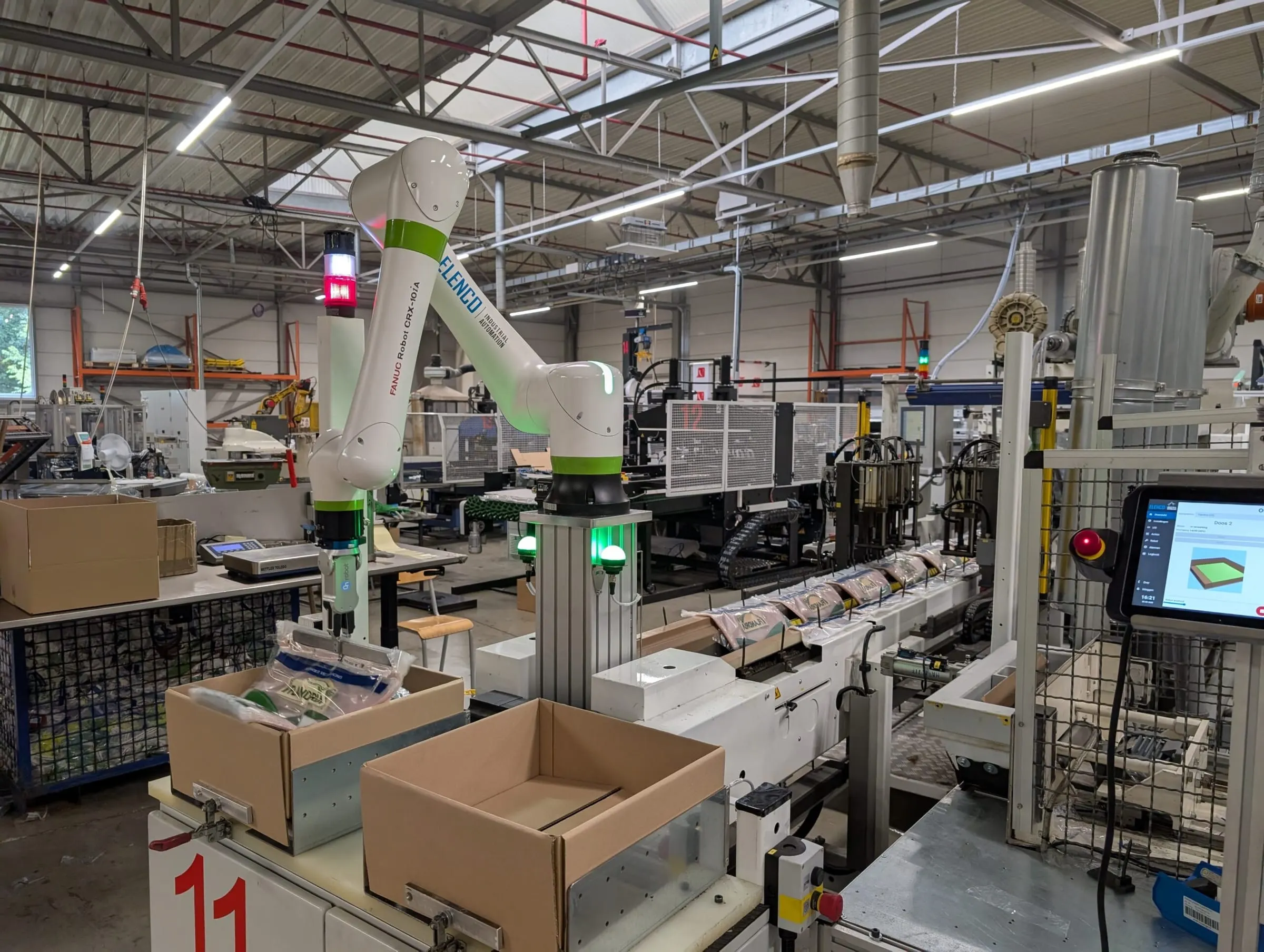
- Consumer goods
- Food & beverages
- Printing industry
- Collaborative robots
More efficient packaging at Alpagro thanks to a cobot installation!
-
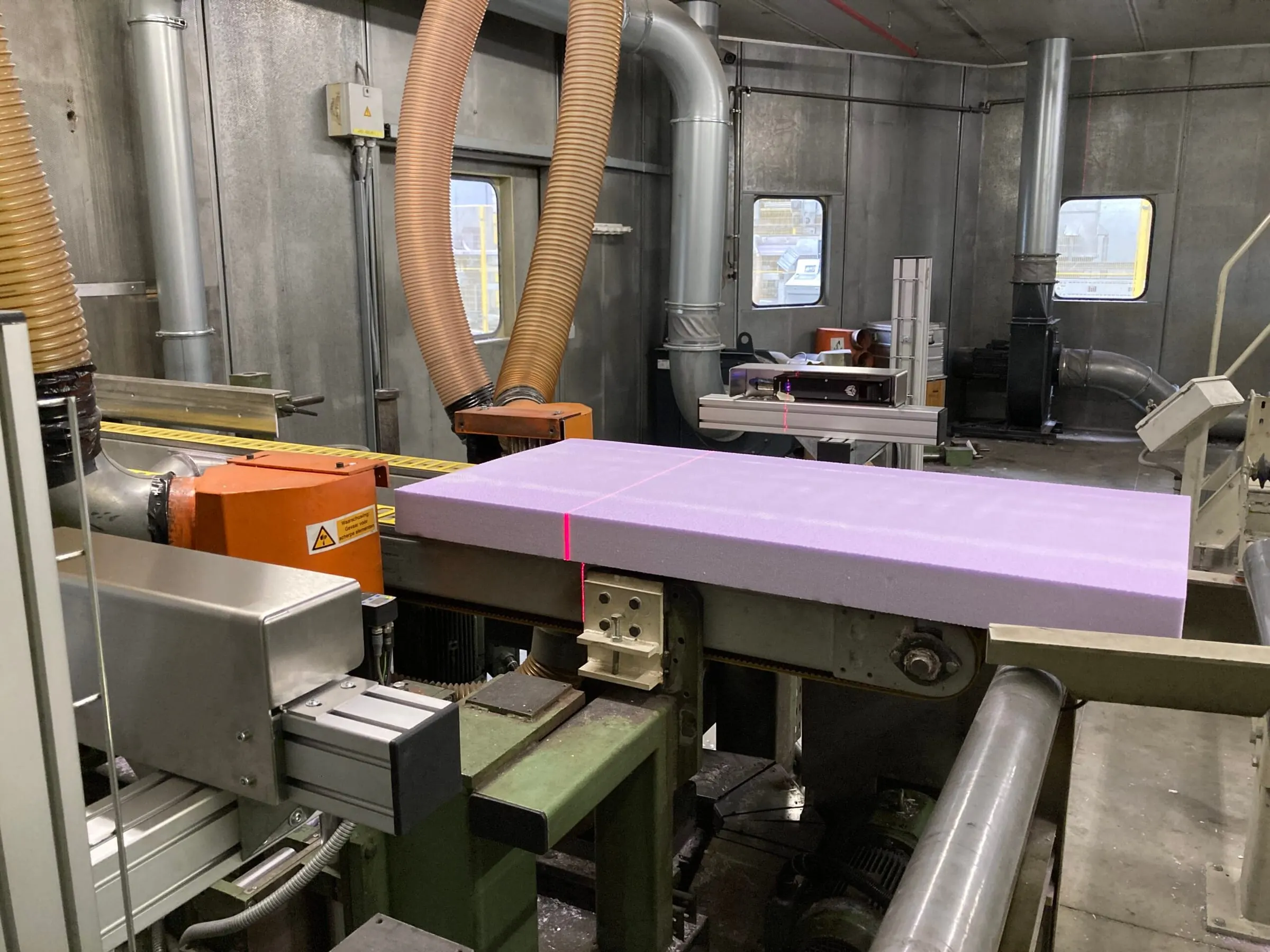
- Building & construction
- PLC / PC programming
- Vision and measurement systems
3D vision system at JACKON Insulation
-
- Consumer goods
- Collaborative robots
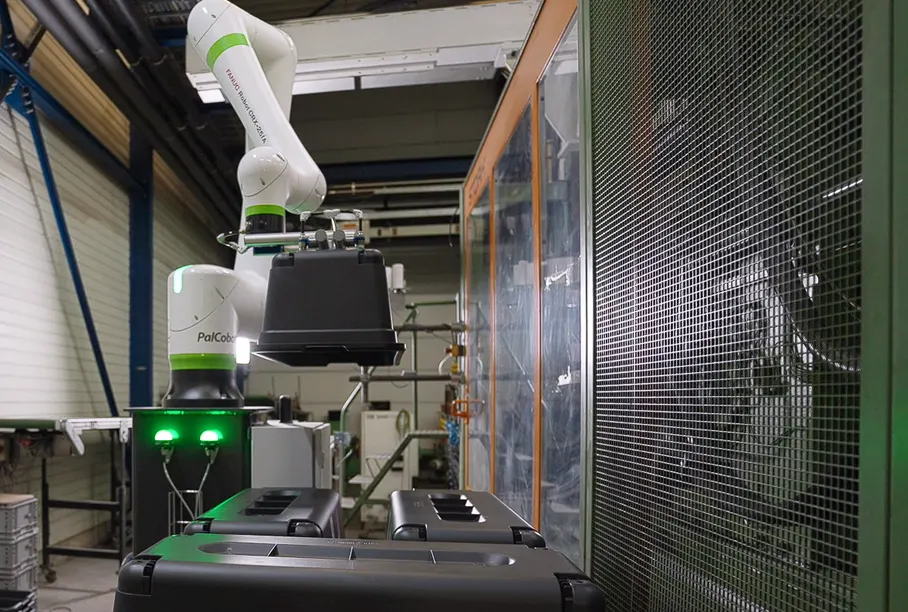
Production automation at Jumi Plastics: 3 cobot palletisers
Industries
Expertise in your industry
- Pharma
- Food & beverages
- Construction and manufacturing
- Consumer goods
- Recycling & waste processing
- Printing industry
Is your sector not on the list above? We may still be able to help you. Contact us for more information.
Frequently asked questions
Questions about industrial robots
Here you'll find answers to the questions customers ask us most often about industrial robots. Is your question not listed? Our experts are happy to help.
-
When do you choose an industrial robot instead of a cobot?
A traditional industrial robot is generally designed for high speeds, large working ranges and heavy or complex industrial applications. A cobot, or collaborative robot, is specifically designed to make collaboration with people possible.
The main difference lies in how the robot is used, its performance and the safety measures it requires. A cobot is not automatically safe without additional measures. Depending on the application, both cobots and industrial robots may need safeguarding.
Our engineers are happy to look at which solution best fits your application by means of a no-obligation simulation.
-
When do you choose a delta robot?
A delta robot is an industrial robot with a parallel mechanical structure, in which several arms drive a central moving platform. Thanks to its lightweight moving parts, a delta robot can reach very high speeds and accelerations, which makes it particularly suited to high-speed pick and place applications.
Delta robots are often used for sorting, packing and positioning products on conveyors. They are of particular interest for the food industry, packaging lines and production processes in which large numbers of light products must be handled quickly and accurately. Combined with machine vision, they can also recognise and pick up products that do not always lie in the same position.
In the concept phase of a new project, we determine whether a delta robot is the right solution for your application, taking into account the required cycle time, product weight, gripper, working area and integration into your production line.
-
When do you choose a SCARA robot?
A SCARA robot (Selective Compliance Assembly Robot Arm) is an industrial robot designed for fast and precise movements in a horizontal work plane. Thanks to its jointed robot arm and vertical axis of motion, this robot is particularly suited to applications where products or components must be positioned accurately.
SCARA robots are used for assembly, pick and place, machine loading, inserting parts and moving small components, among other things. They combine high repeatability with short cycle times and a compact installation.
We select the SCARA robot that best fits the application, taking into account product dimensions, payload, required speed and required accuracy, among other factors.
-
Can you simulate a robot cell in advance?
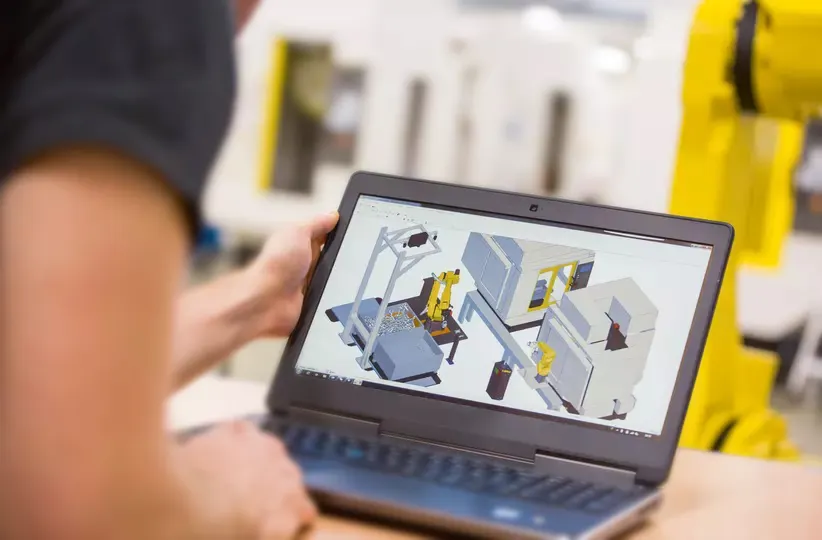
We model your production line in Visual Components, 3D simulation software for robotics and automation. That way we calculate the cycle time, determine the footprint of your end-of-line or assembly line and check whether the robot can reach every position. You see in advance what the installation looks like and how it works, before anything is built. That makes the investment decision easier and avoids surprises at start-up. Curious about your line? Request a simulation.
-
What does a robot project look like?
We start with an analysis of your process and, where needed, a test or feasibility study. We then design and simulate the robot cell, build and test it in advance and install it in your factory.
After start-up and operator training, we remain available for after-sales service. The lead time depends on the complexity of the cell and the delivery time of the robot.
-
Can you modify or extend an existing robot cell?
We adapt existing robot cells for new products, add a vision system or an extra gripper, or replace an outdated control system. We also check whether the safety still meets current standards.
-
Which safety standards and directives do your robot cells comply with?
We design and build industrial robot cells with particular attention to machine safety and CE conformity. Our installations are developed in accordance with the applicable requirements of the Machinery Regulation (EU) 2023/1230.
In doing so, we take into account the risks of the complete application, including the robot, gripper, control system, safety devices and interaction with operators and other machines.
During design and build, we also pay attention to the risk assessment, the selection and integration of suitable safety measures and the verification of the safety functions. The required technical documentation and the applicable CE conformity procedure are also part of the process.
+30
Years of
experience+750
Completed
projects+150
Satisfied
customers+200
Innovative
robotics and camera projects