Flexible stacking of CNC-milled metal shapes with cobot & vision at Decomecc
- Building & construction
- Collaborative robots
- Vision and measurement systems
Decomecc, the Decoiling & Metal Cutting Company, is a high-tech, innovative service centre offering the full range of metal processing options for aluminium, steel and stainless steel. From decoiling, cutting to length, slitting and sawing to laser blanking and CNC milling. At one of these CNC milling machines, a collaborative robot was introduced to automate a task that until recently could only be done by hand: accurately stacking an enormous variety of shapes and sizes.
Case: a complex challenge due to extreme variation
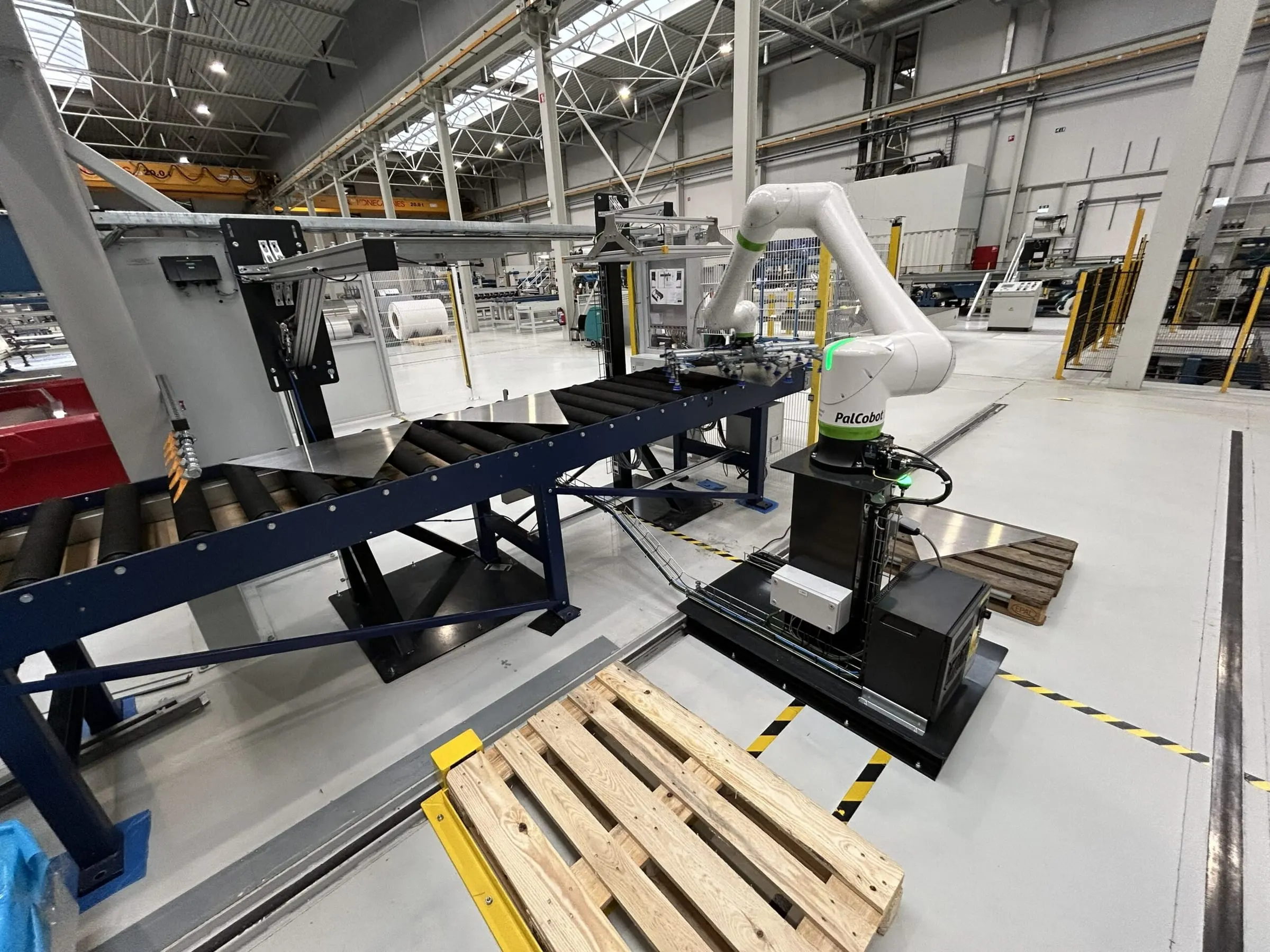
Decomecc mills shapes in every possible size and contour. From classic road signs such as circles and triangles to bonnets, refrigerator panels, parts for the maritime industry and very complex contours made to the customer's specifications. Because this variation is so great, the parts were stacked by hand for years. An operator took each shape off the roller conveyor and stacked it according to the required patterns. That was precise work that required a lot of time and experience. An automatic solution had to be flexible, easy to set up and error-free.
Solution: smart automation with cobot and vision
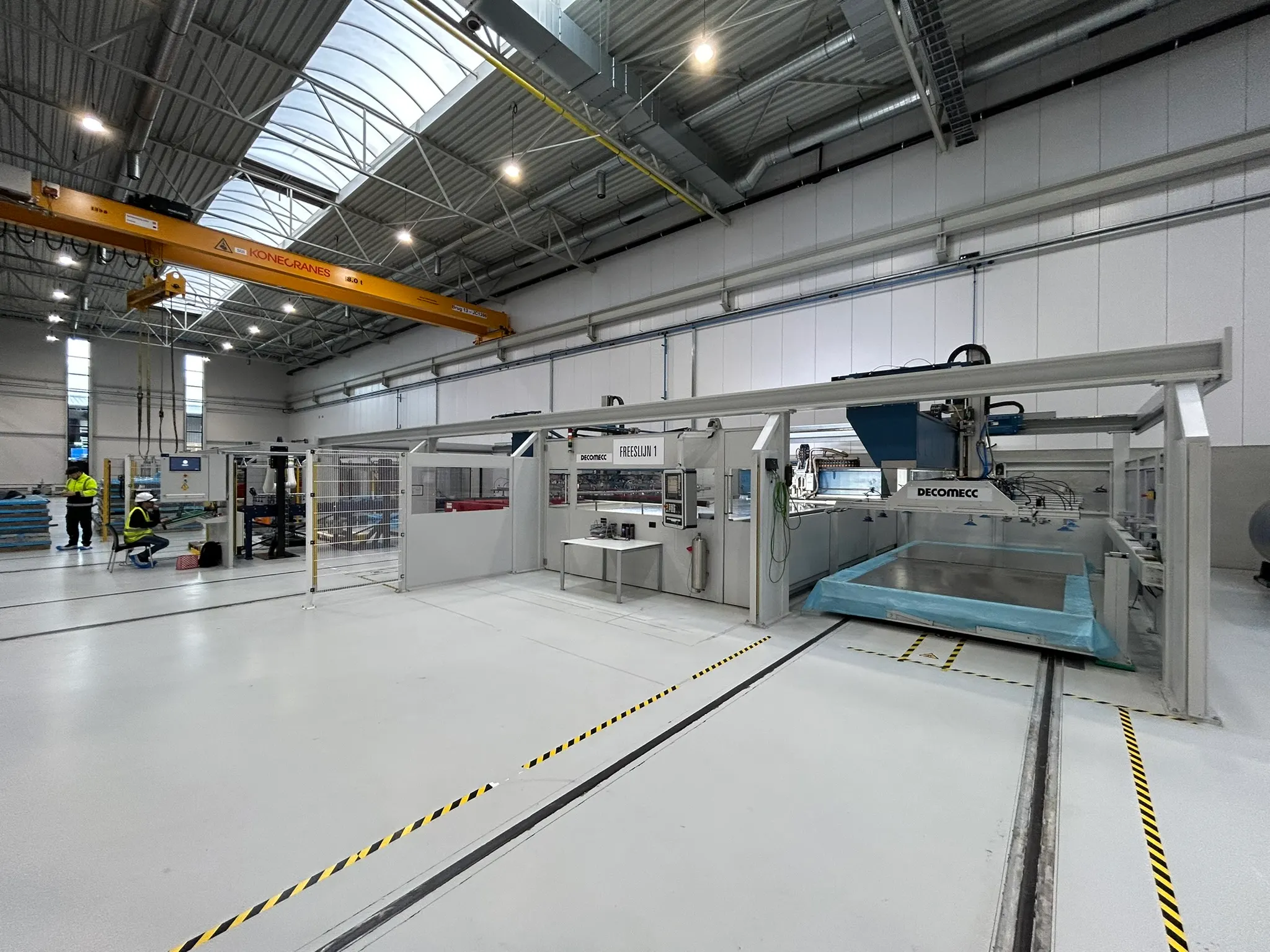
After milling, the shapes end up on a powered roller conveyor. A vision system determines exactly where and how each part is positioned in relation to the cobot. The cobot then uses those measuring points to pick up each shape accurately. The choice of a collaborative robot was strategic. The product mix is large, and the variation even larger. For each shape, the operator can easily teach the pick position by guiding the cobot by hand to the right point and saving it in the library. No programming needed.
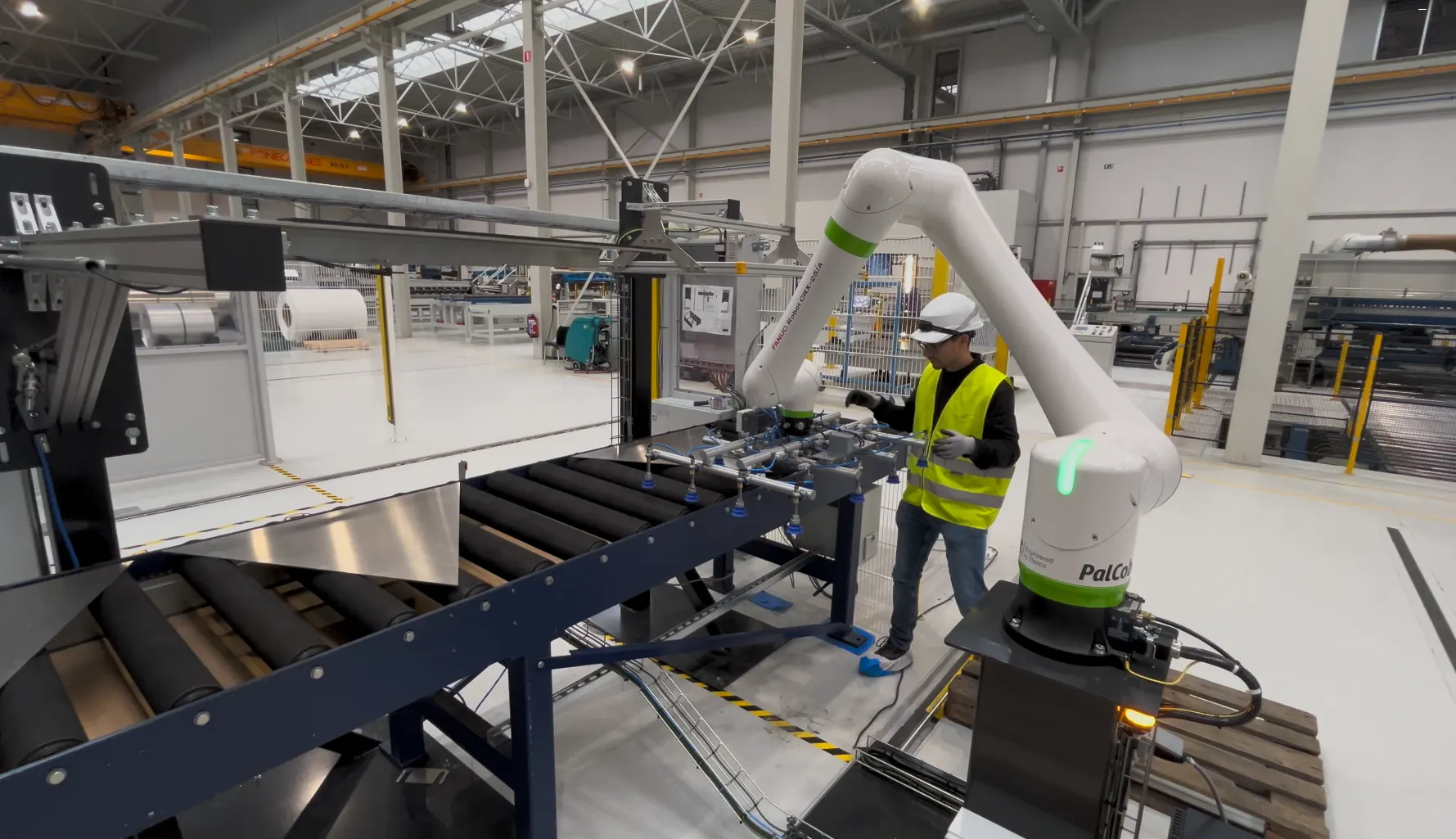
The gripper plays an important role in this. It consists of sixteen suction cups divided over several vacuum zones. The operator only activates the zones that are needed. Four zones are enough for a road sign; a bonnet needs the full surface.
The operator can even configure pallets for smaller shapes entirely on their own and decide how many pieces are placed per layer. This, too, requires no programming knowledge.
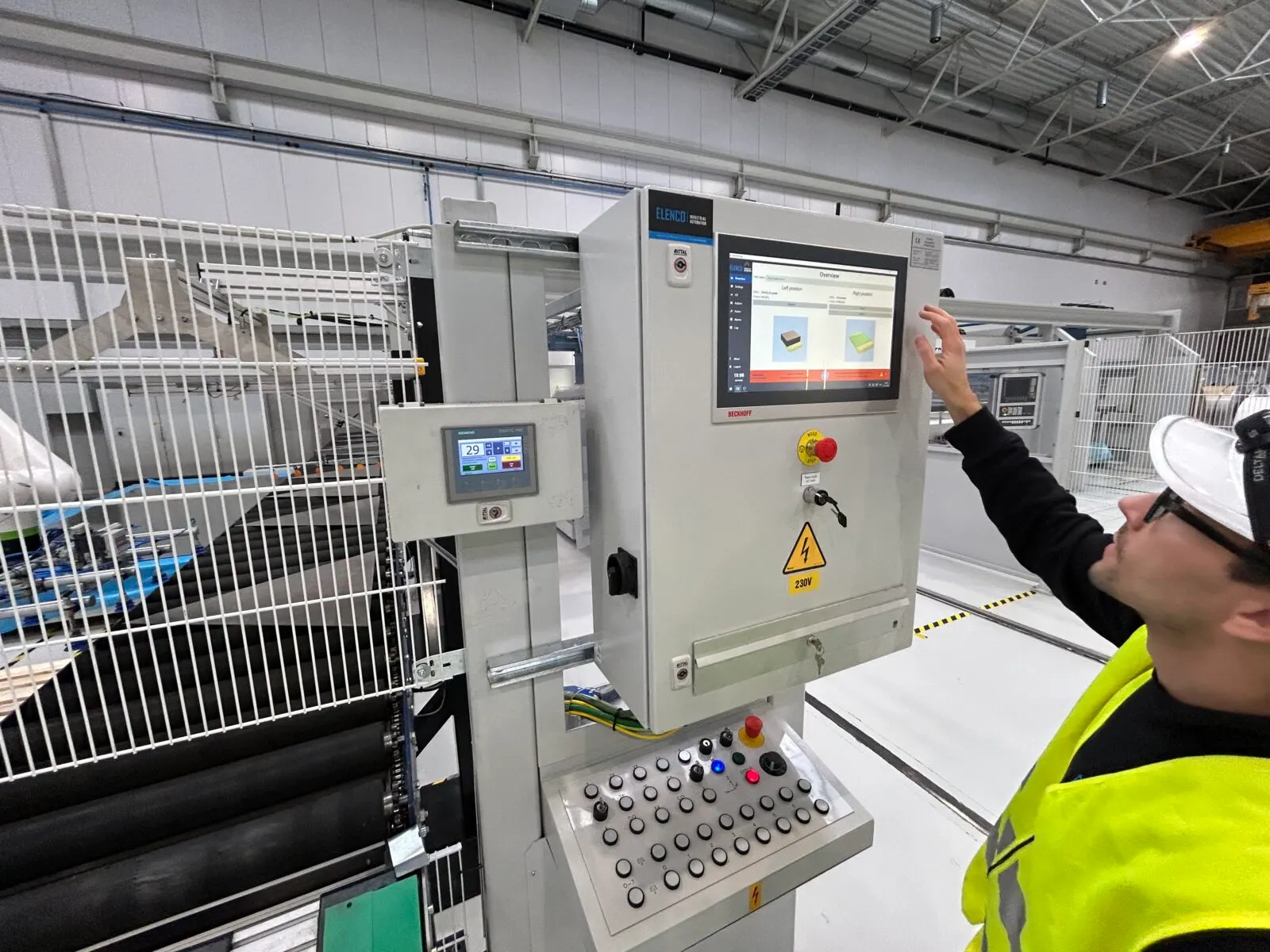
A library of reusable shapes
Once a shape has been taught, it is saved in a clear library. For repeat orders, Decomecc can call up the configuration again immediately. As a result, new shapes are entered quickly and repeat orders are handled very efficiently.
To increase flexibility further, Elenco added extra functions in close consultation with Decomecc. For example, shapes can be stacked in a staggered arrangement when a customer asks for this, so they can be destacked faster later. A turning station is also integrated that automatically rotates plates by 180 degrees, which is needed for materials with protective film.
Measurably better quality and shorter lead time
According to Decomecc, there is a clear improvement in quality. The cobot stacks every pallet perfectly straight according to automotive standards. When the customer asks for a staggered stack, that too can be done fully automatically and reproducibly.
Thanks to the automation, Decomecc can produce at a lower cost, switch between orders faster and greatly reduce changeover times. The process that used to be intensive and time-consuming is now carried out reliably, safely and much more consistently.
Source: Agoria